Yes, ChatGPT ads are live in 2026. OpenAI began testing ads in the United States on February 9, 2026, and has since expanded advertising into additional markets. However, ads are not shown to every ChatGPT user. Availability depends on factors such as the user’s plan, region, and eligibility.
OpenAI says ads may appear for users on the Free and Go plans in supported regions. Plus, Pro, Business, Enterprise, and Edu accounts remain ad-free. Accounts identified as belonging to people under 18 are also excluded from ads.
The company has introduced advertising as a way to help support access to ChatGPT while keeping paid plans ad-free. It says ads are clearly labeled, remain separate from ChatGPT’s answers, and do not influence the responses generated by the AI.
For users, the main questions are whether ads will appear in their accounts, how advertisements are selected, and what information advertisers can access. For marketers and website owners, the bigger question is how this new advertising channel could affect online discovery and digital marketing.
Quick Answer: Are ChatGPT Ads Live Right Now?
Yes. ChatGPT ads are live, but they are available only to eligible users in supported regions and on eligible plans.
- Free plan: Ads may appear in supported regions.
- Go plan: Ads may appear in supported regions.
- Plus and Pro: Ad-free.
- Business, Enterprise, and Edu: Ad-free.
- Accounts identified as belonging to users under 18: No ads.
- Temporary Chats: OpenAI says ads do not appear in these chats.
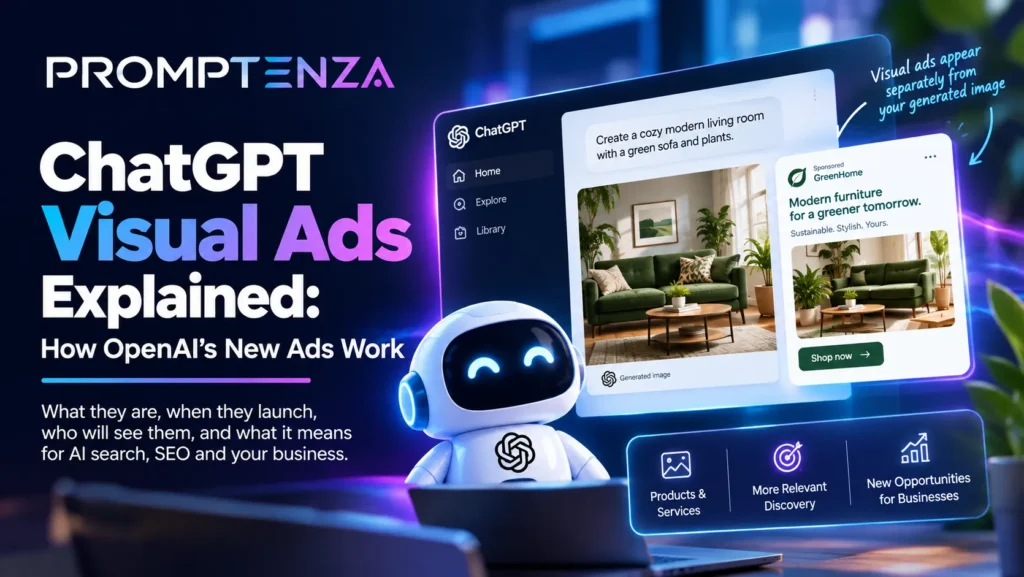
OpenAI is also testing a visual ad format during image generation. These ads are designed to appear separately from the image being created and are clearly identified as advertising.
Availability can change as OpenAI expands its advertising program. For the latest details, consult the official Ads in ChatGPT Help Center.
When Did ChatGPT Ads Launch?
OpenAI started testing ads in ChatGPT in the United States on February 9, 2026. The initial rollout focused on eligible users of the Free and Go plans.
The company has subsequently expanded the advertising platform into additional markets. In August 2026, OpenAI announced an expansion to 31 European markets, followed by further international expansion.
This rollout has two distinct sides: people who may see ads while using ChatGPT, and businesses that can purchase advertising through OpenAI’s advertising platform.
These are related but not identical. A country may have different rules or availability for users viewing ads and for businesses purchasing ads through self-service Ads Manager.
For that reason, businesses should check OpenAI’s current Ads Manager availability list before planning a campaign.
Who Sees Ads in ChatGPT?
Not every ChatGPT account displays advertising. OpenAI’s current guidance identifies the following plan differences.
| ChatGPT plan or experience | Are ads shown? |
|---|---|
| Free | May show ads in supported regions |
| Go | May show ads in supported regions |
| Plus | No ads |
| Pro | No ads |
| Business | No ads |
| Enterprise | No ads |
| Edu | No ads |
| Accounts identified as belonging to users under 18 | No ads |
| Temporary Chats | No ads |
Source: OpenAI’s official advertising FAQ. Availability and eligibility may change.
The distinction between “may show ads” and “always shows ads” is important. Being on an eligible plan does not guarantee that an advertisement will appear in every conversation.
Ad delivery depends on eligibility, the supported region, the conversation context, and the advertising system’s ability to select a relevant ad.
Why Is OpenAI Showing Ads in ChatGPT?
Running an AI service requires substantial computing resources and ongoing development. OpenAI says advertising can help support broader access to ChatGPT and continued investment in the product.
The company has also positioned advertising as a way for businesses to reach people while they research products, compare services, and consider decisions.
The challenge is maintaining user trust. People use ChatGPT for personal questions, work, learning, and complex decisions. Advertising must therefore remain distinct from the AI’s answers and respect privacy and safety boundaries.
Where Do Ads Appear in ChatGPT?
OpenAI’s current documentation describes ads that appear below ChatGPT responses. The advertising unit can include an advertiser’s name, logo or favicon, headline, description, and landing page.
OpenAI has also announced a visual ad format being tested during image generation. This introduces a different format from the original sponsored placements shown below text responses.
The visual format is designed to display advertising separately from the image ChatGPT is generating. A sponsored product image should not be confused with the AI-generated image requested by the user.
For a more detailed explanation of this format, read Promptenza’s related article, “ChatGPT Visual Ads Explained: How OpenAI’s New Ads Work.” Add the published URL for that article here so readers can explore the format in more depth.
Are ChatGPT Ads the Same as ChatGPT’s Answers?
No. OpenAI says advertisements are clearly labeled and separate from the model’s responses. Advertisers cannot pay to change, rank, or influence the answers ChatGPT provides.
An ad appearing next to a conversation does not mean ChatGPT has independently endorsed the advertised business or verified its claims. Users should evaluate sponsored products and services using the same care they would apply to other advertisements.
How Does ChatGPT Decide Which Ads to Show?
ChatGPT advertising is designed around the context of a conversation rather than relying only on a traditional search query.
According to OpenAI, ad selection can consider several signals, including:
- The topic and intent of the current conversation.
- The ad’s headline, description, landing page, and advertiser-provided context.
- The advertiser’s targeting selections.
- Certain signals from a user’s broader ChatGPT experience when ad personalization is enabled.
For example, someone discussing ways to improve a small business website might encounter an advertisement for a relevant business service. Someone comparing different products could see an ad related to that shopping context.
This is an illustrative example, not a guarantee that a particular ad will appear.
OpenAI’s advertising documentation also explains that advertisers can provide context hints describing the conversations, topics, or keywords where their products may be relevant. These hints guide matching but do not function as exact-match keywords or guarantee placement in a particular conversation.
This is one reason ChatGPT advertising differs from conventional keyword-based search advertising: the system can use conversational context to help determine relevance.
Can Advertisers See Your ChatGPT Conversations?
OpenAI says advertisers do not receive users’ private ChatGPT conversations. According to its current advertising FAQ, advertisers do not receive chat history, memories, names, email addresses, precise locations, IP addresses, or sensitive information such as health and political topics.
For the early advertising test, OpenAI says advertisers receive aggregated reporting, such as views and clicks, rather than individual users’ private conversations.
However, privacy and ad personalization are not the same thing. OpenAI may use information within ChatGPT to select relevant ads without giving advertisers direct access to that information.
Depending on a user’s settings, ad personalization may use selected signals from the broader ChatGPT experience, including past chats and memories. Users should review the current settings and official documentation to understand the choices available to them.
For more detail, read OpenAI’s official explanation of ads in ChatGPT.
Do ChatGPT Ads Influence AI Answers?
OpenAI says no. Its stated policy is that advertising and the chat model operate separately, and advertisers cannot influence the answers ChatGPT gives.
That distinction is important because users may rely on ChatGPT to compare services, learn about a topic, or evaluate options. A sponsored placement should be understood as advertising—not as proof that the model recommends a product.
Users should also distinguish between an AI-generated answer, a sponsored advertisement, and any independent evidence supporting a product’s claims.
Can You Turn Off Ads in ChatGPT?
OpenAI provides choices for users who prefer not to see ads. Depending on availability and region, options include moving to an ad-free paid plan or choosing a free, ad-free experience with additional usage limits.
Users can also manage available ad-personalization controls and use the options displayed on an ad to hide or report it.
The exact choices can vary by region and may change as the advertising test develops. Check the current settings and Help Center rather than assuming every option is available to every account.
What Do ChatGPT Ads Mean for Businesses and Marketers?
ChatGPT advertising creates another potential channel for businesses that want to reach people during research and decision-making. Instead of relying only on a list of search results, advertisers may be able to reach users while they are exploring options through a conversation.
OpenAI’s advertising platform supports campaign tools and measurement features, but availability depends on the advertiser’s country and eligibility.
Businesses considering the platform should evaluate several factors before investing.
1. Check whether your business can advertise
Start by checking the official Ads Manager availability page. Confirm that the legal entity responsible for the campaign and billing is based in an eligible country.
Do not assume that being able to use ChatGPT in a country automatically means businesses based there can purchase ads through self-service Ads Manager.
2. Build a useful landing page
An advertisement can attract attention, but the landing page must satisfy the user’s needs. Provide accurate product information, transparent pricing where relevant, clear explanations, and a useful next step.
Avoid unsupported claims or pages that promise more than the product can deliver.
3. Understand conversational intent
People may use ChatGPT to compare solutions, understand trade-offs, or work through a problem. Advertisers should focus on matching their offering to a genuine user need instead of trying to force their message into unrelated conversations.
4. Measure results carefully
Review the reporting and conversion-measurement options available to your account. Evaluate outcomes such as qualified traffic, relevant engagement, and conversions rather than relying on impressions alone.
Because ChatGPT advertising is evolving, businesses should treat early results as evidence to assess—not proof that the channel will outperform every other platform.
What Do ChatGPT Ads Mean for SEO and AI Search?
ChatGPT advertising and organic visibility are different things. Paying for an ad is not the same as earning a place in an organic answer, and OpenAI says advertisements do not influence ChatGPT’s answers.
For website owners, the emergence of ChatGPT ads is another reason to understand how people discover information through AI-powered products. But it does not mean that traditional SEO has become irrelevant or that every website needs to purchase AI advertising.
A practical strategy is to maintain helpful, original content, make pages easy to understand, answer users’ questions directly, and measure which sources actually send relevant visitors.
Websites should also avoid assuming that an advertisement guarantees a recommendation from ChatGPT or that a paid placement will automatically improve organic search rankings.
For additional context, read Promptenza’s article “Google Discover’s AI Future: What Website Owners Need to Know” at https://promptenza.com/google-discover-ai-future/. It explores how AI-related changes may affect online discovery and publishers.
Website owners preparing for the broader AI advertising landscape should also review their content strategy, privacy disclosures, analytics, and conversion paths before committing to a new advertising channel.
Frequently Asked Questions About ChatGPT Ads
Are ChatGPT ads live in 2026?
Yes. OpenAI began testing ads in the United States on February 9, 2026, and has expanded the advertising program to additional markets. Availability depends on the region, plan, and user eligibility.
Which ChatGPT plans show ads?
OpenAI says ads may appear on Free and Go plans in supported regions. Plus, Pro, Business, Enterprise, and Edu accounts remain ad-free.
Does everyone using ChatGPT Free see ads?
No. Ads may appear for eligible Free-plan users in supported regions, but not every conversation or account will necessarily display an ad.
Can advertisers read my ChatGPT conversations?
OpenAI says advertisers do not receive private conversations, chat history, memories, names, email addresses, precise locations, IP addresses, or sensitive information. Advertisers receive aggregated reporting, such as views and clicks, for the early test.
Are ChatGPT ads personalized?
They can be. OpenAI says ad selection may use the context and intent of the current conversation and, when personalization is enabled, selected signals from a user’s broader ChatGPT experience. Available controls and the signals used may change over time.
Do ChatGPT ads change the answers the AI gives?
OpenAI says advertisements do not influence ChatGPT’s answers. Ads are separate from responses, clearly labeled, and cannot be used by advertisers to alter or rank the model’s answers.
Are ChatGPT ads available in every country?
No. Availability for people viewing ads and access for advertisers are both subject to regional eligibility and rollout decisions. Businesses should check OpenAI’s current Ads Manager availability page.
Can businesses advertise on ChatGPT?
Yes, eligible businesses can use OpenAI’s advertising platform where access is supported. Advertisers should check the official country list, account requirements, campaign options, and measurement documentation before planning a campaign.
Can I avoid seeing ChatGPT ads?
Depending on region and availability, users may choose an ad-free paid plan or a free ad-free option with additional usage limits. They can also manage available ad-personalization settings and hide or report individual ads.
Final Thoughts
ChatGPT ads are no longer just a future possibility. OpenAI has launched the advertising program and is expanding it across markets while developing new ad formats and measurement tools.
For users, the most important issues are understanding which plans may display ads, knowing how ad personalization works, and distinguishing sponsored placements from AI-generated answers. For businesses, the opportunity is to explore a new advertising channel while checking eligibility and measuring real outcomes.
For website owners and publishers, the right response is not to abandon SEO or assume that paid AI advertising is essential. Continue creating useful content, understand how audiences discover information, and assess new advertising channels using reliable evidence.
As ChatGPT advertising develops, its long-term value will depend on whether it can help businesses reach relevant audiences while preserving the privacy and trust that users expect from an AI assistant.
Official sources and further reading
- OpenAI: Ads in ChatGPT — FAQ, eligibility, privacy and controls
- OpenAI: Ads in ChatGPT — The Basics
- OpenAI: Ads Manager availability by country
- OpenAI: ChatGPT Ads expands across Europe
- OpenAI: Building advertising for the way people use AI
Last updated: October 19, 2026. Advertising availability, formats, and controls may change; consult OpenAI’s official documentation for the latest information.