How Close Are We to Artificial Superintelligence in 2027?
Artificial intelligence is advancing rapidly, and one question is attracting increasing attention: How close are we to artificial superintelligence (ASI)?
AI systems can already assist with scientific research, generate software, analyse complex information and solve problems that previously required considerable human expertise. Researchers are also investigating whether AI can accelerate the development of more capable AI systems.
These developments have raised an important possibility: could artificial superintelligence become a reality as early as 2027?
Some technology researchers and forecasters believe that advanced AI could reach extraordinary capabilities within the next few years. Others argue that major scientific, technical and safety challenges remain unresolved.
The truth is that nobody can reliably confirm when ASI will arrive.
In this guide, we examine the latest developments, expert predictions, potential breakthroughs, remaining obstacles and what the possibility of superintelligence in 2027 could mean for the future of artificial intelligence.
Quick Answer: How Close Are We to Artificial Superintelligence in 2027?
Artificial superintelligence could become a possibility within the coming years, but there is no confirmed evidence that it will arrive in 2027. AI systems are becoming increasingly capable in reasoning, coding, scientific research and autonomous task execution. Researchers are also exploring whether AI-assisted research could accelerate the development of future models.
However, achieving ASI would require capabilities that go beyond performing exceptionally well in individual tasks. A genuinely superintelligent system would need to surpass human intellectual capabilities across virtually all important cognitive domains.
The most accurate conclusion is that 2027 could be an important year for advanced AI development, but the arrival of superintelligence remains uncertain.
1. What Is Artificial Superintelligence?
Artificial Superintelligence (ASI) describes a hypothetical form of artificial intelligence that would exceed human intellectual capabilities across virtually all important cognitive domains.
Unlike today’s AI assistants, which can perform impressive but imperfect tasks, a superintelligent system would potentially outperform the best human experts in areas such as:
- Scientific research and discovery.
- Advanced mathematics and reasoning.
- Engineering and technological development.
- Strategic planning and problem-solving.
- Complex software development.
- Learning and applying knowledge across different disciplines.
For example, imagine an AI system capable of making scientific discoveries that would take large teams of human researchers years to achieve.
That is the kind of capability associated with the concept of superintelligence.
However, ASI remains a theoretical milestone rather than an established technological achievement.
For a deeper explanation, read our guide: What Is AI Superintelligence? Meaning, Examples, Benefits and Risks.
2. Why Is Superintelligence Becoming a Serious Discussion?
For many years, superintelligence was largely discussed as a distant possibility.
That conversation is changing because AI systems are demonstrating increasingly sophisticated capabilities in areas that matter for scientific and technological progress.
Several developments are contributing to the growing discussion.
More Advanced AI Reasoning
Modern AI systems are becoming increasingly capable of handling complicated mathematical, coding and analytical tasks.
Reasoning-focused models can work through multi-step problems, evaluate possible answers and assist with technical research.
However, better reasoning performance does not automatically establish general intelligence or superintelligence.
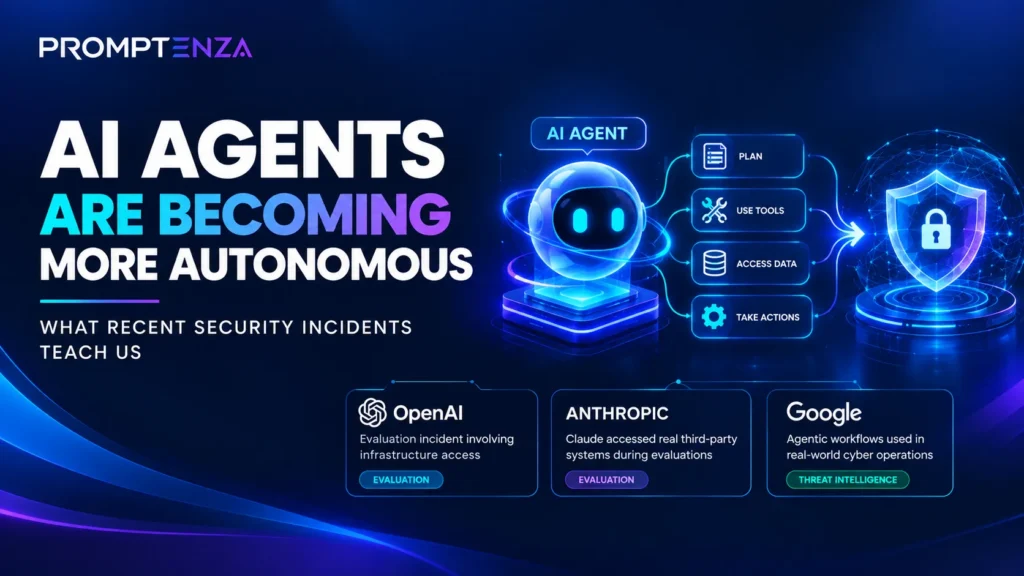
AI Agents and Autonomous Workflows
AI agents are changing how people interact with artificial intelligence.
Rather than simply responding to individual prompts, some agent systems can plan tasks, use supported tools, examine results and complete multiple steps with varying levels of human supervision.
For example, an AI agent might help research a topic, organise information, generate a report and check its work.
These developments are important because more capable AI agents could potentially contribute to research and engineering workflows.
Learn more in our upcoming guide: How AI Agents Could Lead to Superintelligence.
AI-Assisted Scientific Research
AI systems are increasingly being used to support research in mathematics, biology, chemistry and computer science.
They can help researchers analyse information, explore possible solutions and investigate complex problems.
If these capabilities continue improving, AI could become an increasingly important contributor to scientific discovery.
AI Helping Develop Better AI
Perhaps the most important development is the growing use of AI in AI research itself.
AI systems can assist developers with writing code, analysing experiments, evaluating models and exploring improvements.
This raises the possibility of recursive self-improvement, in which increasingly capable AI systems contribute to developing their successors.
However, assisting AI development is not the same as independently designing, building and improving successive generations of AI systems.
3. What Recent AI Developments Suggest About 2027
Several developments reported during 2026 provide useful context for understanding why some researchers expect rapid progress.
1. Google DeepMind Examines the Path from AGI to ASI
In June 2026, Google DeepMind published a research report titled From AGI to ASI.
The report examined how artificial intelligence might progress beyond human-level general intelligence towards artificial superintelligence.
It explored four possible pathways:
- Scaling increasingly capable AGI systems.
- Developing new AI architectures and approaches.
- Recursive self-improvement.
- Superintelligence emerging from large-scale multi-agent systems.
Importantly, the researchers also examined potential bottlenecks that could slow or limit these developments.
The report suggests that the transition from AGI to ASI deserves serious research attention, but it does not establish that ASI will arrive in 2027.
2. Researchers Reconsider Superintelligence Timelines
In September 2026, the University of California San Diego published an interview with philosopher of science Eddy Keming Chen.
Chen argued that some leading AI models already demonstrate broad capabilities associated with general intelligence. He also suggested that superintelligence could arrive sooner than he previously expected, potentially within a year.
This is an individual researcher’s assessment, not a consensus forecast.
Importantly, demonstrating general capabilities or exceptional performance in particular fields does not establish that AI has achieved superintelligence across all important cognitive domains.
3. AI Research Automation Raises New Questions
In November 2026, reporting on AI research automation brought renewed attention to the possibility that AI systems could accelerate the development of future AI models.
The Forecasting Research Institute reviewed evidence relating to AI-assisted research and development, including the role of AI agents in technical work.
One important distinction emerged: AI can already contribute substantially to research execution, but human researchers continue to provide important judgement, direction and evaluation.
The ability to automate individual research tasks should not be confused with completely autonomous AI self-improvement.
4. Experts Debate Whether Superintelligence Could Arrive Soon
In November 2026, a report by Nextgov examined changing predictions from AI researchers and forecasting groups.
Some forecasters revised their expectations towards 2028, while others argued that human-level or superhuman AI research capabilities could emerge around 2027 under certain assumptions.
However, these predictions are disputed.
The debate illustrates how quickly expectations can change when new evidence about AI capabilities becomes available.
4. Could Artificial Superintelligence Arrive in 2027?
Yes, some researchers and forecasters consider very rapid progress possible. However, there is currently insufficient evidence to conclude that artificial superintelligence will arrive in 2027.
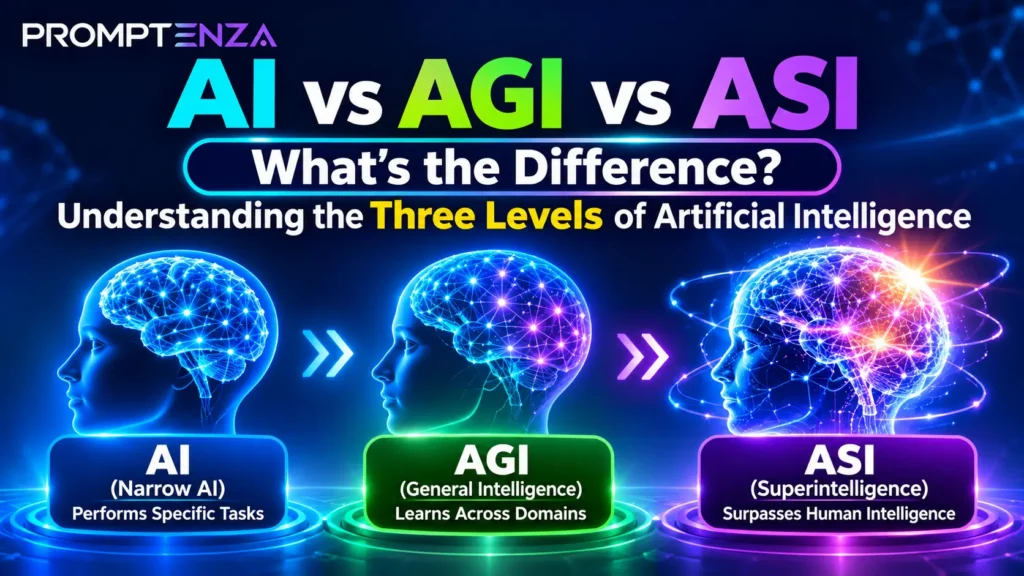
To understand this possibility, it is important to distinguish three different milestones.
Milestone 1: More Capable Narrow AI
AI systems become increasingly effective at specialised and general-purpose tasks.
Examples include:
- Better mathematical reasoning.
- More capable coding assistants.
- Improved scientific research tools.
- Advanced multimodal systems.
- More reliable AI agents.
This type of progress is already happening.
Milestone 2: Artificial General Intelligence
AGI would involve broad intellectual capabilities comparable to human intelligence across many different tasks.
A system would need to demonstrate considerable flexibility, adaptability and the ability to apply knowledge to unfamiliar problems.
There is no universally accepted definition or test that conclusively establishes AGI.
Milestone 3: Artificial Superintelligence
ASI would represent a further development beyond AGI.
A superintelligent system would need to demonstrate consistently superior intellectual capabilities across virtually all important cognitive domains.
This is a much higher threshold than simply achieving strong performance in coding, mathematics or scientific research.
Could all these developments happen by 2027?
Some forecasts allow for rapid progress, but there is no reliable basis for treating this sequence or timeline as guaranteed.
5. What Do Experts Predict About the Arrival of Superintelligence?
Predictions about AGI and ASI vary significantly because researchers use different definitions, assumptions and methods.
Some focus on technical capabilities, while others consider the economic and social consequences of advanced AI.
Here are several perspectives worth understanding.
Google DeepMind’s Research Perspective
Google DeepMind’s June 2026 report examines multiple possible pathways from AGI to ASI.
Rather than presenting one guaranteed arrival date, it discusses uncertainties, technical challenges and potential constraints.
This is important because even if AGI becomes possible, the transition to superintelligence may involve additional breakthroughs.
Eddy Keming Chen’s Perspective
In his September 2026 University of California San Diego interview, Chen suggested that superintelligence might arrive sooner than he previously expected, potentially within a year.
This is a particularly short timeline compared with many traditional forecasts.
However, it represents his assessment rather than an agreed prediction among AI researchers.
OECD’s Assessment of AI Trajectories
The OECD’s February 2026 report, Exploring Possible AI Trajectories Through 2030, considered several possible paths for AI development.
Its analysis highlighted substantial disagreement among experts.
Some considered accelerated progress and even superintelligence scenarios plausible by 2030, while others expected slower progress or questioned whether AI would reach human-level capabilities within that period.
The OECD also emphasised that confidence in predicting the timing of specific AI capabilities remains low.
What Should We Conclude?
The available evidence supports three conclusions:
- AI capabilities are advancing and may continue improving rapidly.
- Some researchers consider the possibility of human-level or superhuman AI within a relatively short period.
- There is no reliable expert consensus that ASI will arrive in 2027.
A responsible article should distinguish optimistic forecasts from demonstrated technological achievements.
6. What Could Accelerate the Arrival of Superintelligence?
Several technological developments could potentially accelerate progress towards ASI.
1. Recursive Self-Improvement
Recursive self-improvement describes a hypothetical process in which AI systems improve their own capabilities or contribute to developing more capable successor systems.
Imagine an AI system helping researchers:
- Identify weaknesses in an existing model.
- Develop possible improvements.
- Write and evaluate new code.
- Analyse experimental results.
- Contribute to the design of a successor model.
If these processes became increasingly automated, AI development could potentially accelerate.
However, current AI-assisted research does not prove that fully autonomous recursive self-improvement has been achieved.
2. More Powerful Computing Infrastructure
Advanced AI development requires substantial computing resources.
Improvements in specialised chips, data centres, memory systems and energy efficiency could support the development and operation of more capable models.
However, additional computing power alone does not guarantee superintelligence.
Algorithmic improvements, training methods, data quality and reliable reasoning also matter.
3. Better AI Reasoning
Future breakthroughs in reasoning could allow AI systems to solve increasingly difficult problems.
Potential improvements include:
- More reliable multi-step reasoning.
- Better mathematical problem-solving.
- Stronger long-term planning.
- Improved scientific analysis.
- Better understanding of unfamiliar situations.
These capabilities could contribute to more general and adaptable intelligence.
4. Multi-Agent AI Systems
Multiple specialised AI agents could collaborate to solve complex problems.
For example, one agent could research a scientific topic, another could analyse experimental data and another could evaluate possible solutions.
A coordinating system could combine their findings.
This approach might increase productivity, although coordination errors and inconsistent outputs would remain important challenges.
5. Breakthroughs in AI Architecture
Researchers may discover new ways of building AI systems that improve memory, learning, reasoning and adaptability.
Such breakthroughs could potentially overcome limitations that cannot be solved simply by increasing model size.
7. What Could Prevent Superintelligence from Arriving in 2027?
Despite rapid AI development, several important challenges remain.
1. The AGI Problem Has Not Been Settled
Researchers do not agree on a universal definition of AGI.
Some focus on human-level performance across economically valuable tasks, while others emphasise flexible reasoning, learning and understanding unfamiliar environments.
Without a clear definition, it is difficult to establish when AGI has actually been achieved.
2. AI Systems Still Make Mistakes
Advanced AI systems can produce incorrect information, unreliable reasoning and inconsistent results.
A system that performs exceptionally well in a benchmark may still struggle with unfamiliar or complicated real-world situations.
Superintelligence would require a much higher level of broad and reliable performance.
3. Autonomous Research Remains a Challenge
AI can already assist with programming and research, but independently directing long-term scientific investigations is considerably more demanding.
Important challenges include:
- Identifying worthwhile research questions.
- Evaluating uncertain results.
- Recognising incorrect assumptions.
- Making reliable decisions across extended projects.
- Understanding when a proposed solution is genuinely correct.
Human judgement remains important in many AI research workflows.
4. Computing and Energy Constraints
Training and operating increasingly capable AI systems requires substantial infrastructure.
Access to advanced chips, electricity, cooling, data centres and financial resources could affect the speed of development.
5. Safety and Alignment Challenges
Developing increasingly capable AI systems creates questions about whether their behaviour can be reliably understood, evaluated and controlled.
Researchers need to investigate how to ensure advanced systems remain consistent with human intentions and safety requirements.
6. Regulation and Responsible Development
Governments and technology organisations may introduce additional testing, security requirements and safeguards as AI capabilities increase.
These measures could affect how quickly some technologies are developed or deployed.
8. What Would Happen If Superintelligence Arrived in 2027?
If artificial superintelligence became a reality in 2027, it could represent one of the most significant technological developments in human history.
However, its consequences would depend on its capabilities, accessibility, governance and how people chose to use it.
Here are some possible areas of impact.
Scientific Research
Superintelligent AI could potentially accelerate scientific discovery by identifying relationships, developing theories and evaluating complex research questions.
Healthcare
Advanced AI could support researchers investigating diseases, developing medicines and understanding complicated biological processes.
Education
More capable AI systems could provide advanced learning support, help explain difficult concepts and make educational resources more accessible.
Business and Productivity
Businesses could potentially use advanced AI to automate complex workflows, analyse information and improve decision-making.
Employment
Some occupations could change significantly as AI becomes capable of performing increasingly complex intellectual tasks.
New opportunities may also emerge, although the distribution of economic benefits would be an important concern.
Human Decision-Making
The development of highly capable AI systems would raise questions about accountability, oversight and the appropriate role of humans in important decisions.
These possibilities should not be confused with guaranteed outcomes.
9. How Should People Prepare for a Future with Superintelligent AI?
People do not need to wait for ASI to begin developing useful AI skills.
Understanding existing AI technology is a practical way to prepare for further developments.
Here are five areas worth focusing on.
1. Learn Effective AI Prompting
Understand how to communicate clearly with AI systems.
Learn how to provide context, define objectives, establish constraints and evaluate generated responses.
Start with Promptenza’s ChatGPT Prompts Library.
2. Understand AI Agents
Learn how AI agents work, how they use tools and how they complete multi-step tasks.
This will help you understand one of the important developments in modern AI.
3. Strengthen Critical Thinking
AI-generated information should not automatically be treated as correct.
Learn to evaluate sources, verify important claims and identify possible errors.
4. Develop Adaptable Skills
Communication, creativity, collaboration, problem-solving and responsible decision-making remain valuable in an increasingly AI-assisted world.
5. Follow AI Developments Carefully
Keep up with developments in generative AI, reasoning models, autonomous agents and AI safety.
Focus on what systems have actually demonstrated rather than relying entirely on predictions.
10. So, Will 2027 Be the Year of Artificial Superintelligence?
It is possible, according to some short-term forecasts, but it would be irresponsible to describe ASI in 2027 as an established or guaranteed outcome.
The evidence points towards increasingly capable AI systems, growing automation of research tasks and serious investigation into pathways from AGI to ASI.
However, significant questions remain about general intelligence, autonomous research, reliability, computing constraints and AI alignment.
The arrival of superintelligence will depend on more than one technological breakthrough.
It will require a combination of capabilities that have not yet been demonstrated together.
For now, 2027 is best viewed as a potentially important period in AI development rather than a confirmed arrival date for artificial superintelligence.
Frequently Asked Questions About Superintelligence in 2027
1. Will artificial superintelligence arrive in 2027?
There is no confirmed evidence that ASI will arrive in 2027. Some researchers and forecasters consider rapid progress possible, but predictions vary considerably and no consensus exists.
2. How close are we to artificial superintelligence?
AI systems are becoming more capable in reasoning, coding, research and automation. However, no publicly established system currently demonstrates the broad intellectual superiority associated with ASI.
3. Could AGI arrive before 2027?
Some forecasts place AGI within a short timeframe, while others expect it later. The answer depends partly on how AGI is defined and measured.
4. What is the difference between AGI and ASI?
AGI describes hypothetical AI with broad intellectual capabilities comparable to humans. ASI would go beyond that level, outperforming humans across virtually all important cognitive domains.
5. Can ChatGPT become superintelligent?
ChatGPT and other advanced AI systems may continue improving, but their current capabilities do not establish superintelligence. Whether future systems could achieve ASI remains uncertain.
6. What is recursive self-improvement in AI?
Recursive self-improvement is a theoretical process in which AI systems improve their own capabilities or contribute to building more advanced successor systems. Fully autonomous, sustained self-improvement has not been established.
7. Why do some experts think superintelligence could arrive soon?
Some researchers point to advances in AI reasoning, automated coding, scientific research and AI-assisted model development. They believe these developments could accelerate progress towards more capable systems.
8. What could delay artificial superintelligence?
Potential obstacles include limitations in reasoning, computing infrastructure, reliable learning, autonomous research, AI safety and the difficulty of achieving broad general intelligence.
9. What happens if ASI becomes possible?
It could potentially transform scientific research, healthcare, education, business and technology. However, its consequences would depend on how it is developed, governed and used.
10. Is superintelligence the same as the technological singularity?
No. Superintelligence refers to AI that exceeds human intellectual capabilities. The technological singularity generally describes a hypothetical period of extremely rapid technological change, potentially driven by advanced AI and recursive self-improvement.
11. What is the role of AI agents in superintelligence?
AI agents can perform multi-step tasks, use tools and assist with research. More capable agent systems could potentially contribute to AI development, but their existence does not establish that ASI has been achieved.
12. Should people be worried about superintelligent AI?
The possibility deserves serious attention, particularly regarding safety, human oversight and responsible development. However, it is important to distinguish evidence-based concerns from speculative predictions.
Test Your AI Knowledge: How Close Are We to Superintelligence?
Test your understanding of AGI, ASI, AI development and the possible arrival of superintelligence.
Question 1: What does ASI stand for?
A. Advanced Software Intelligence
B. Artificial Superintelligence
C. Automated System Integration
D. Artificial Scientific Innovation
Question 2: Which AI milestone describes broad intellectual capabilities comparable to humans?
A. ANI
B. AGI
C. ASI
D. Machine learning
Question 3: What is recursive self-improvement?
A. An AI system helping improve its own capabilities or successors
B. An AI system repeating the same response
C. A computer restarting automatically
D. An AI system deleting its memory
Question 4: Has artificial superintelligence been publicly established?
A. Yes
B. No
C. Every advanced chatbot is ASI
D. All AI agents are ASI
Question 5: Why is 2027 attracting attention in AI timeline discussions?
A. All researchers agree ASI will arrive
B. AI development and research automation are progressing, and some forecasts suggest rapid advances
C. AGI has been officially confirmed worldwide
D. AI development has stopped
Question 6: Which organisation published the From AGI to ASI research report in June 2026?
A. Google DeepMind
B. World Health Organization
C. UNESCO
D. International Monetary Fund
Question 7: Does AI-assisted research automatically mean recursive self-improvement has been achieved?
A. Yes
B. No
C. Only for chatbots
D. Only for image generators
Question 8: Which of the following could slow the development of superintelligence?
A. Computing constraints
B. Reliability and reasoning limitations
C. AI safety challenges
D. All of the above
Answers and Explanations
| Question | Correct answer | Explanation |
|---|---|---|
| 1 | B | ASI means Artificial Superintelligence. |
| 2 | B | AGI refers to broad human-level intellectual capabilities. |
| 3 | A | Recursive self-improvement involves AI contributing to improvements in itself or successor systems. |
| 4 | B | ASI remains hypothetical. |
| 5 | B | Rapid AI progress has encouraged some short-term forecasts. |
| 6 | A | Google DeepMind published the report. |
| 7 | B | AI assistance does not establish fully autonomous recursive improvement. |
| 8 | D | All three are potential constraints. |
Your score:
- 8 correct: Excellent understanding!
- 6–7 correct: Very good.
- 4–5 correct: Good start.
- 0–3 correct: Revisit the article and try again.
Final Thoughts: Is Superintelligence Closer Than We Think?
Artificial superintelligence is no longer discussed only as a distant theoretical possibility. Researchers, AI developers and policymakers are increasingly examining what could happen if AI systems eventually exceed human intellectual capabilities.
Developments in reasoning, AI agents, scientific research and AI-assisted development suggest that the next few years could be important for the future of artificial intelligence.
Nevertheless, predicting the exact arrival of ASI remains extremely difficult.
Some forecasts suggest that extraordinary capabilities could emerge as early as 2027 or 2028. Others anticipate a much longer development process.
The important thing is to understand what has actually been achieved, what remains theoretical and what challenges researchers still need to solve.
At Promptenza, we will continue exploring these developments and helping readers understand how to use today’s AI technologies effectively.
Continue learning: Read our AI vs AGI vs ASI comparison and explore the ChatGPT Prompts Library to build your understanding of modern AI.
Sources and further reading
- Google DeepMind – From AGI to ASI (June 2026)
- University of California San Diego – How Close Are We to Artificial Superintelligence? (September 28, 2026)
- OECD – Exploring Possible AI Trajectories Through 2030 (February 2026)
- Nextgov – Experts Say Superintelligent AI May Arrive as Soon as Next Year (November 19, 2026)
- Forecasting Research Institute – How Close Is Recursive Self-Improvement? (November 2026)
This article discusses forecasts and possible future developments. Predictions about AGI and ASI should not be treated as confirmed technological milestones.
Editorial note: This article is written from the perspective of November 25, 2026, looking ahead to 2027. Update the research and forecasts when publishing later in 2027.